Three companions — for ADHD, autism & bipolar disorder; for everyday mindfulness; and for healing from narcissistic & emotional abuse. Built from 30 years in healthcare technology and lived neurodivergent experience. One page, below, holds all three.

Dr. Sharada Rao has spent 30 years at the intersection of technology and human life — leading $750M+ portfolios at Microsoft, Cognizant, and Birlasoft, and deploying healthcare infrastructure that put ambulances on roads across rural India.
She was CIO and technology lead for the simultaneous launch of India's 108 national ambulance service and 104 mobile telemedicine programme across eight states. At Birlasoft, she ran the end-to-end technology programme for Johnson & Johnson's Covid-19 vaccine lifecycle. She led Hillrom's RetinaVue AI for diabetic retinopathy prevention in rural patients.
She is also a certified Reiki Master of 15 years, a published author of four books, and a consciousness researcher whose work draws on Indian philosophy, Western metaphysics, and lived contemplative practice. She received her own AUDHD diagnosis as an adult — after decades at the top of global technology delivery. BAAJIT is the app she needed and couldn't find.
She is the founder of Svayam (Ground. Root. Grow.) — a mental wellness platform integrating AI therapy, neurodivergence support, and ancient healing wisdom. Senior Council Member, GLG.
Free. Open-source. Built for ADHD, autism, and bipolar disorder. Available on Android, iOS, and macOS. MIT licence from day one.
Your mindfulness companion. A warm, private space for daily reflection — with breath work, guided meditation, birdsong, journaling, and gentle care-at-home wisdom. Free to use, opens in any browser. Available in five Indian languages.
Manas doesn’t ask you to arrive as anything in particular. Just show up. The rest is small doors in.
A quietly designed digital companion for people navigating narcissistic and emotional abuse — free to use, no signup, no download. Opens in any browser. Everything stays on the survivor's device.
Every choice in Homeward — what it stores, what it refuses to say, what it never asks of the person using it — is an ethical stance, not a UX default. At a moment when AI products are designed and shipped faster than most teams can examine what they are encoding into them, this document makes that thinking legible: the principles behind the tool, and the things it refuses to do, and why. Written for researchers, clinical partners, and anyone evaluating the ethics behind the design.
Read the Document (PDF)Thirteen tabs hold the survivor across the arc of recovery. Find your way respects every stage equally — recovering, coping, confused, want to stay and cope, want to leave and survive — and points each to the parts of Homeward most likely to help.
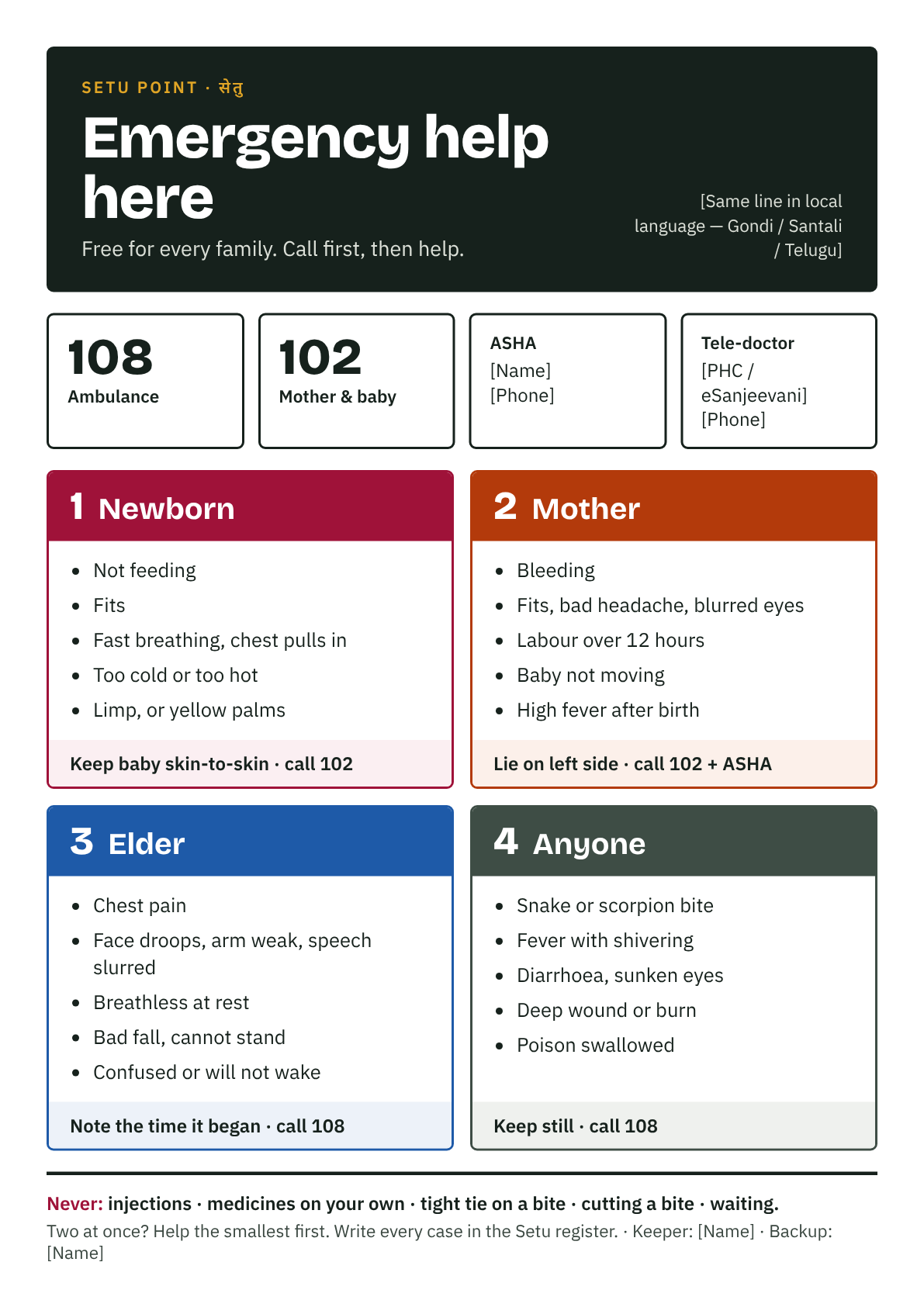
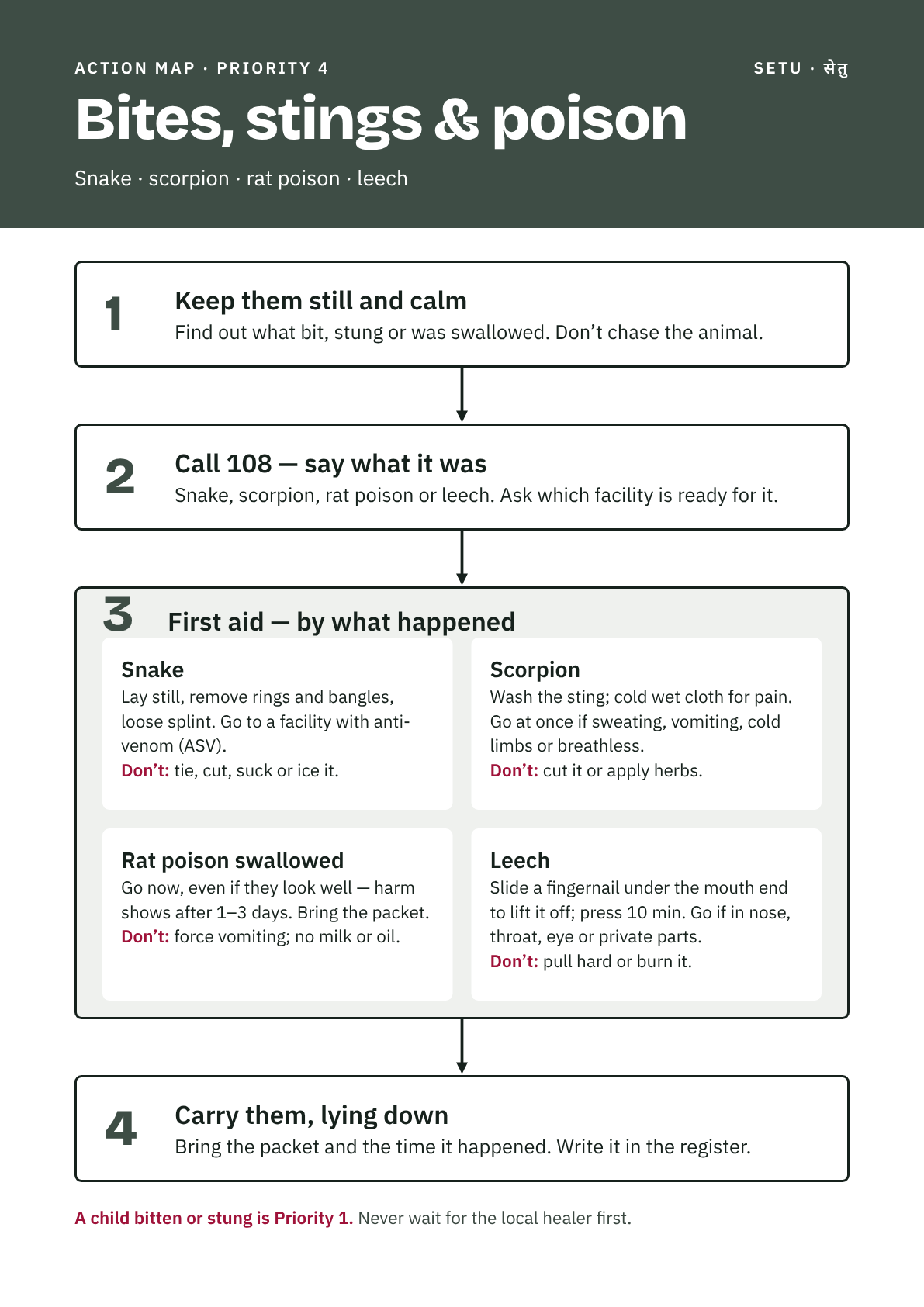
In a tribal village, the nearest doctor may be two hours away. The nearest kirana is two minutes away. Setu is built on the shop that is already there — free to every family.
Most emergency care in India is designed from the hospital outward. Setu starts from the other end — the moment a mother begins to bleed or a newborn stops feeding, in a village with no clinic and one bar of signal.
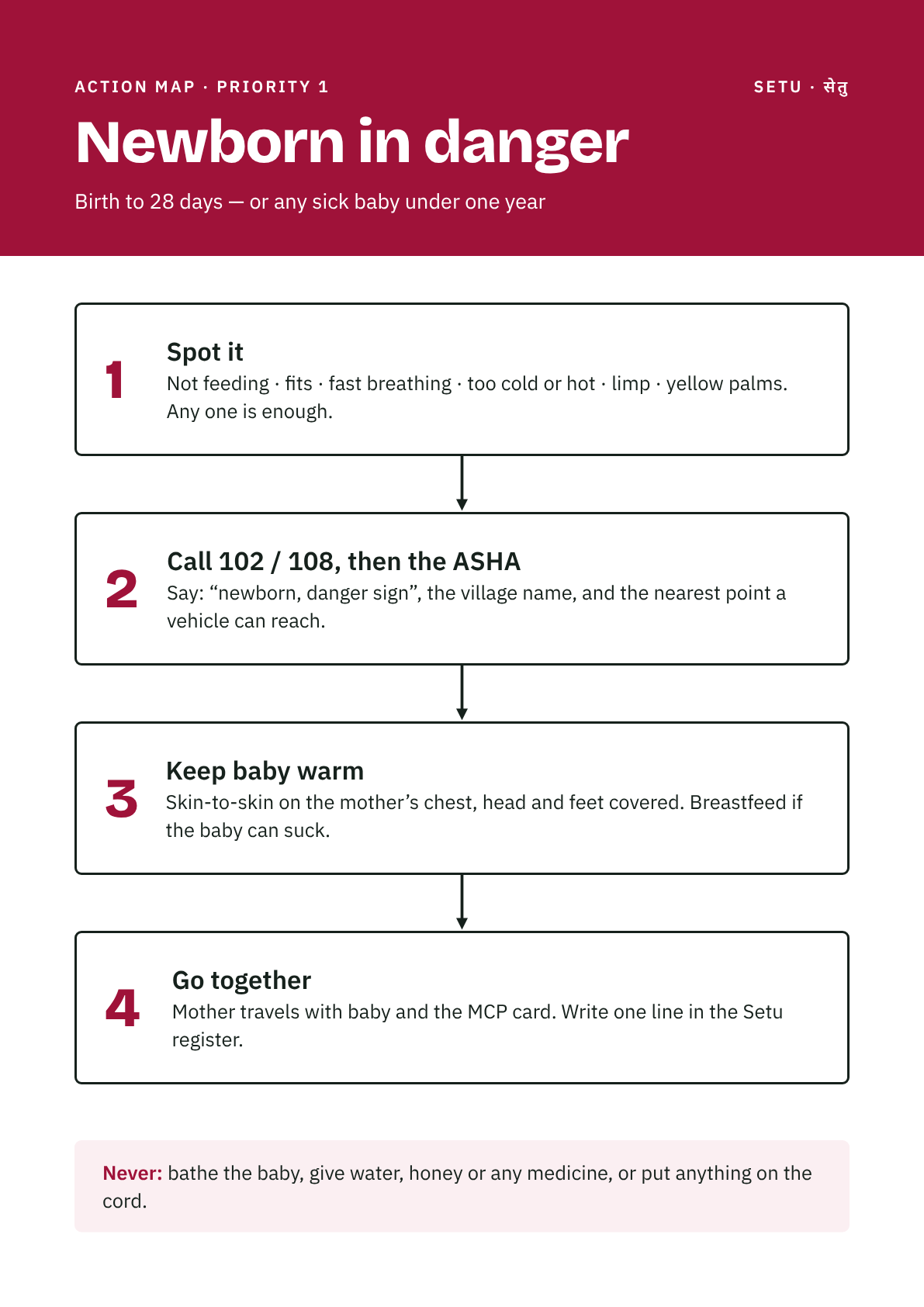
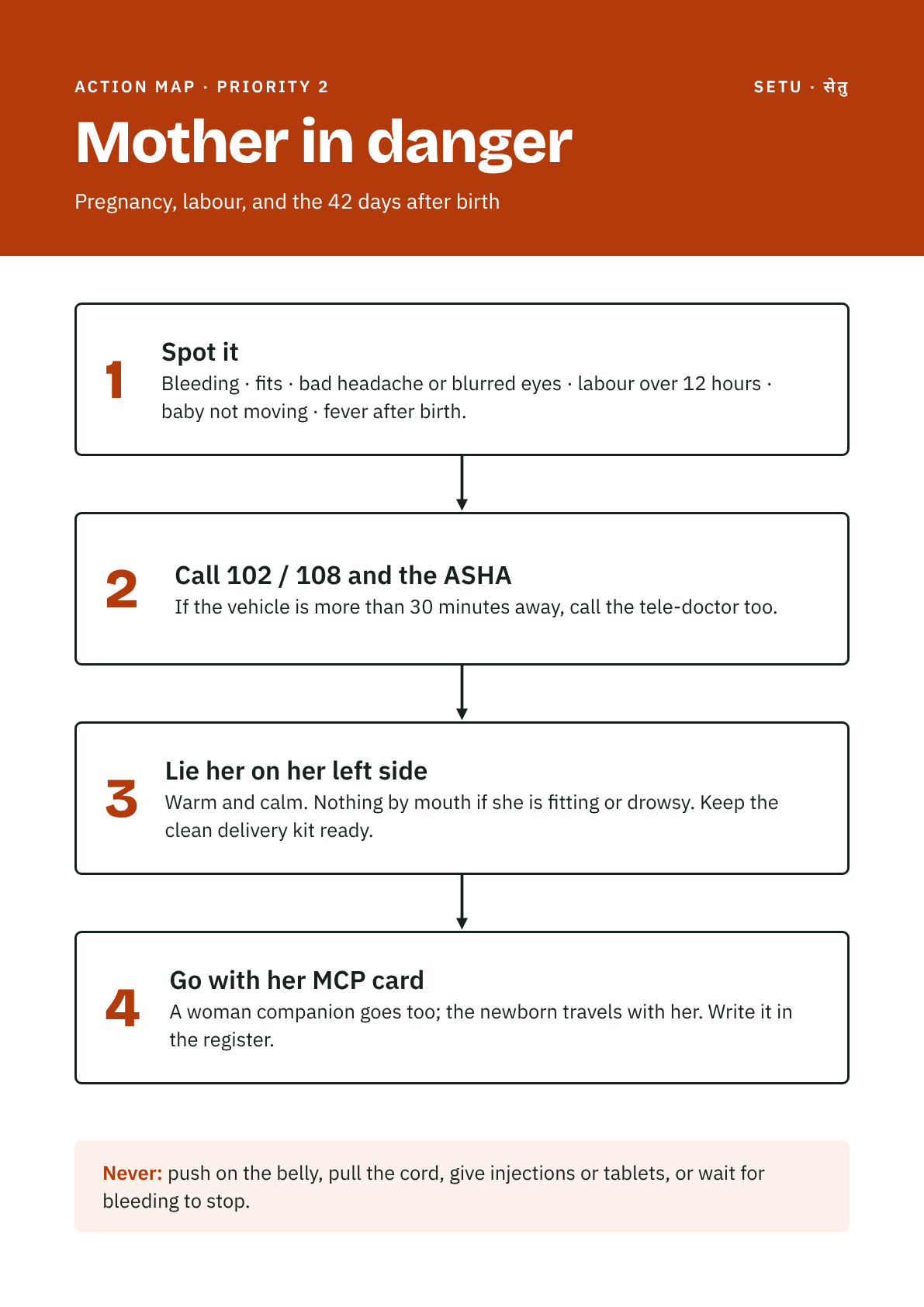
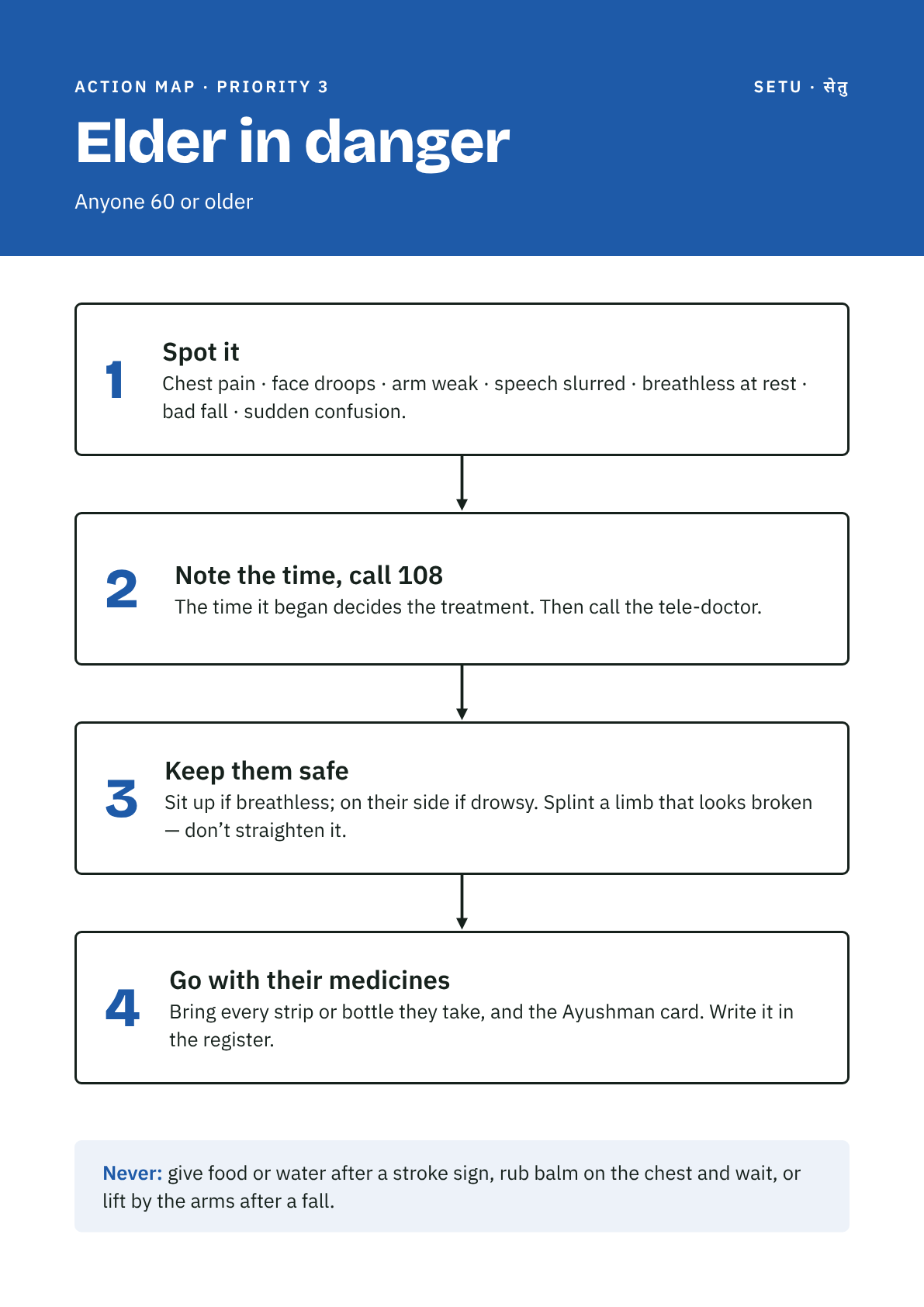
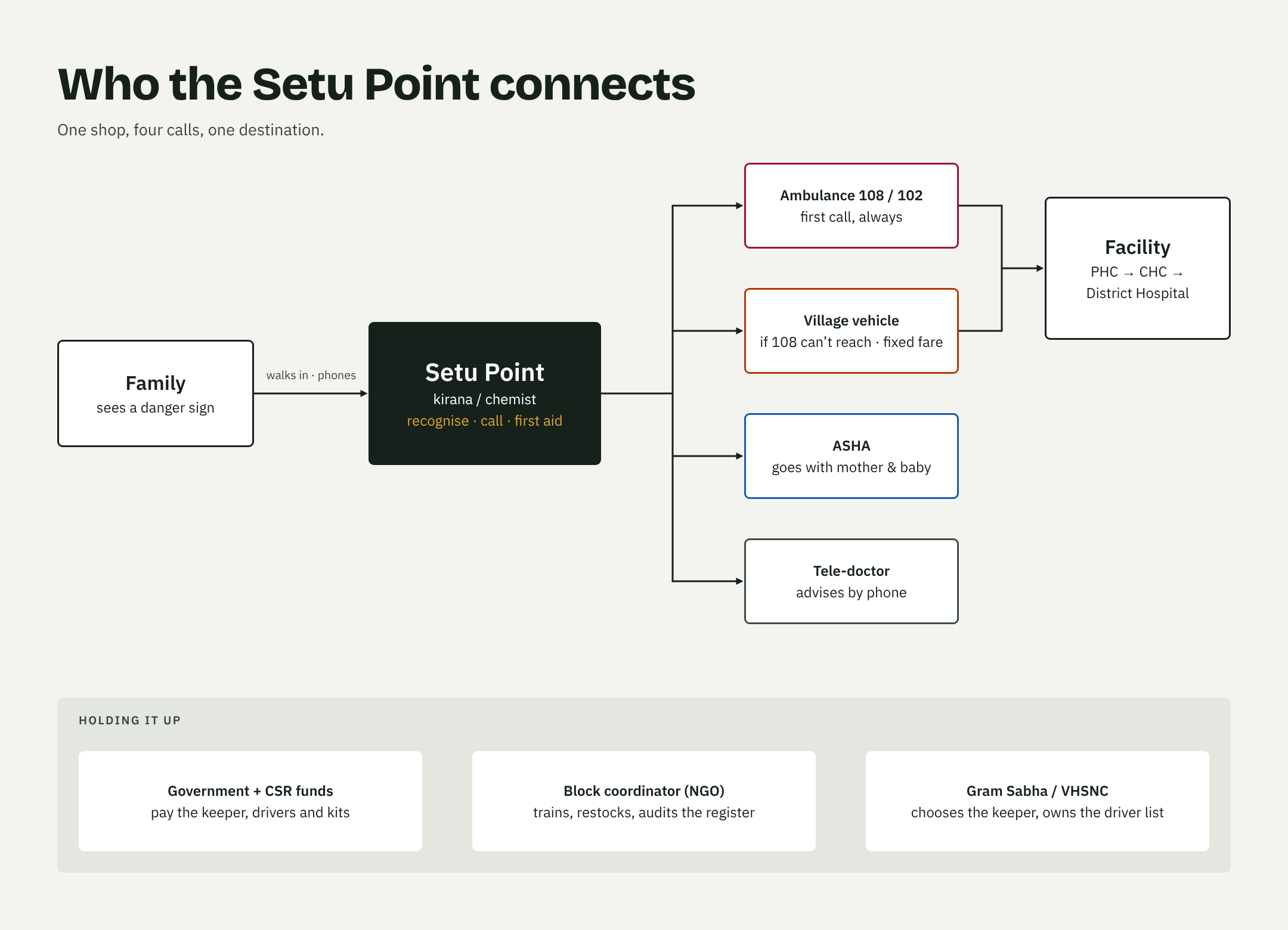
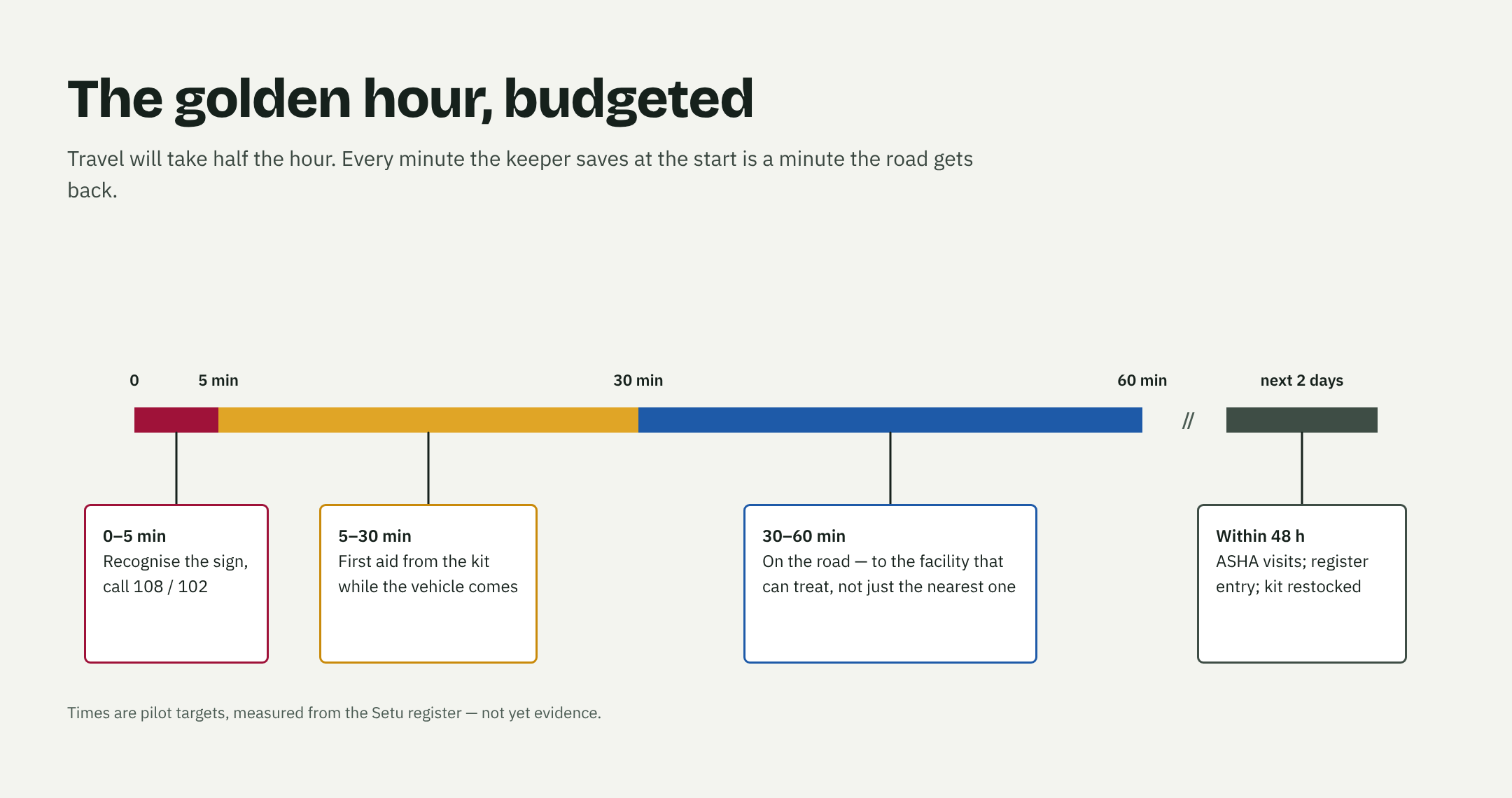
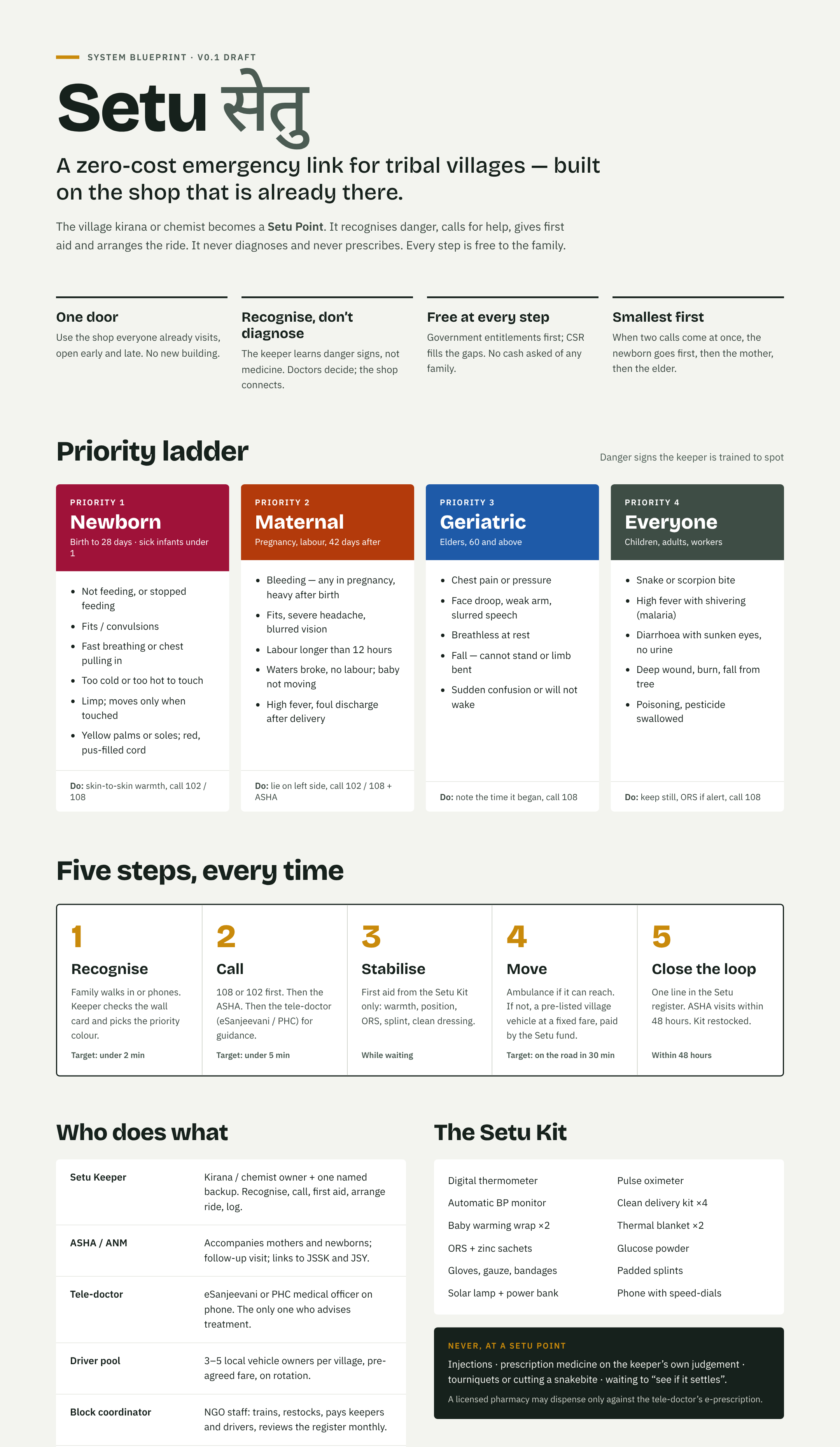
The village kirana or chemist becomes a Setu Point. The keeper, with one named backup, is trained in danger signs, not medicine: recognise, call, stabilise, move, close the loop. No diagnosing, no injections, no prescribing. A tele-doctor advises; the shop connects.
When two calls come at once, the smallest goes first — newborns, then mothers, then elders, then everyone else.
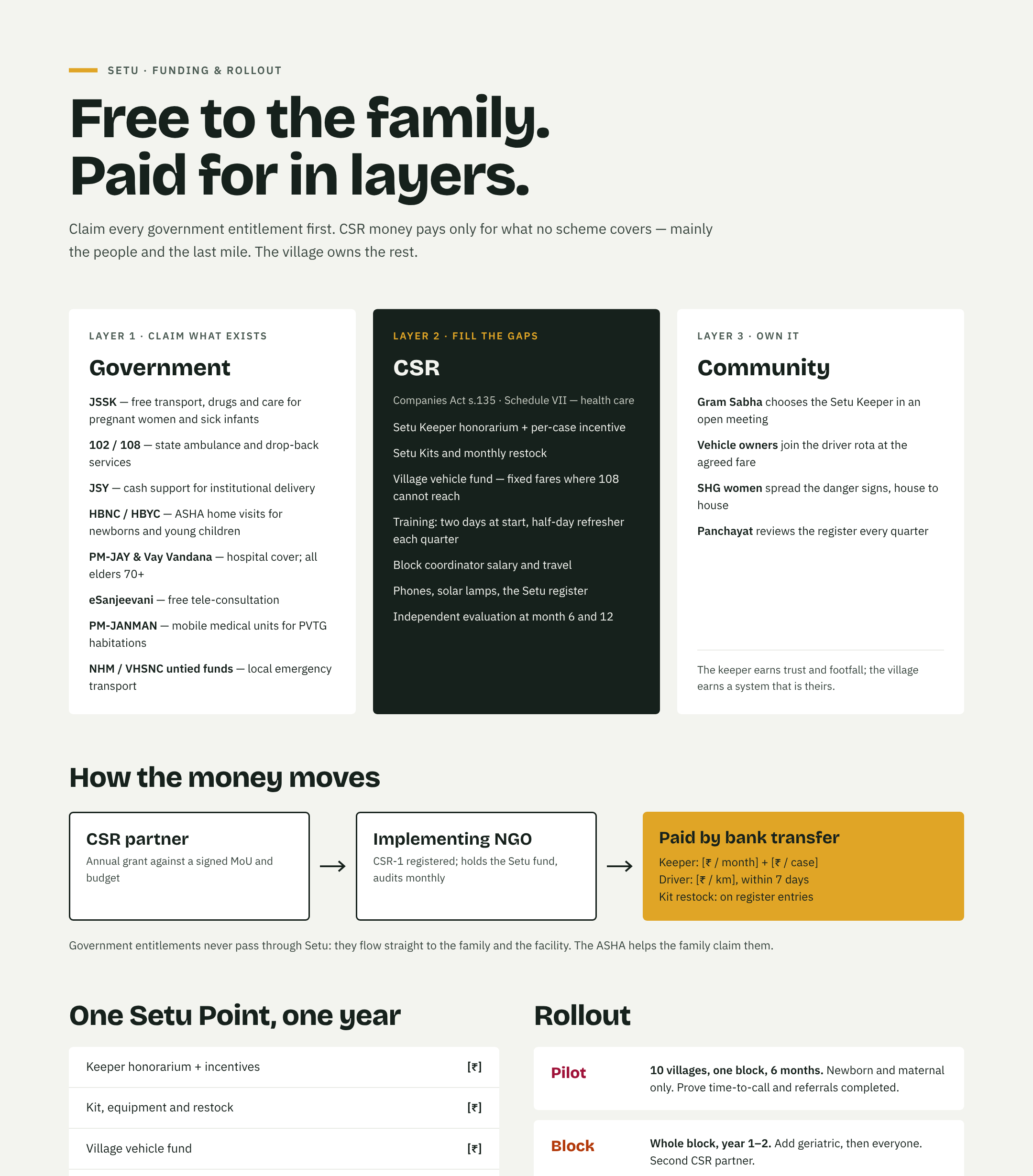
Nothing is charged to the family. Government entitlements come first — JSSK, 108/102, JSY, PM-JAY, eSanjeevani, PM-JANMAN. CSR funds fill only what no scheme covers: the keeper’s honorarium, the kit, a vehicle fund where the ambulance can’t reach, training and coordination. The Gram Sabha chooses the keeper and owns the driver list.
Seven papers published in H1 2026, spanning consciousness phenomenology, Vedic geometry, mathematics of liberation, and metaphysical analysis of meditative awareness. Five carry Zenodo DOIs; two indexed on PhilArchive / PhilPapers.
Service has always been part of the practice — not separate from it.
Available for interviews, profiles, and contributed columns on healthcare technology, AI in mental wellness, neurodivergence, consciousness research, and women in technology leadership.
Press EnquirySvayam is building at the intersection of AI, ancient healing, and neurodivergence support — two live products, seven published research papers, and a clear path to $10M ARR. Seed-stage conversations welcome.
Investor Enquiry